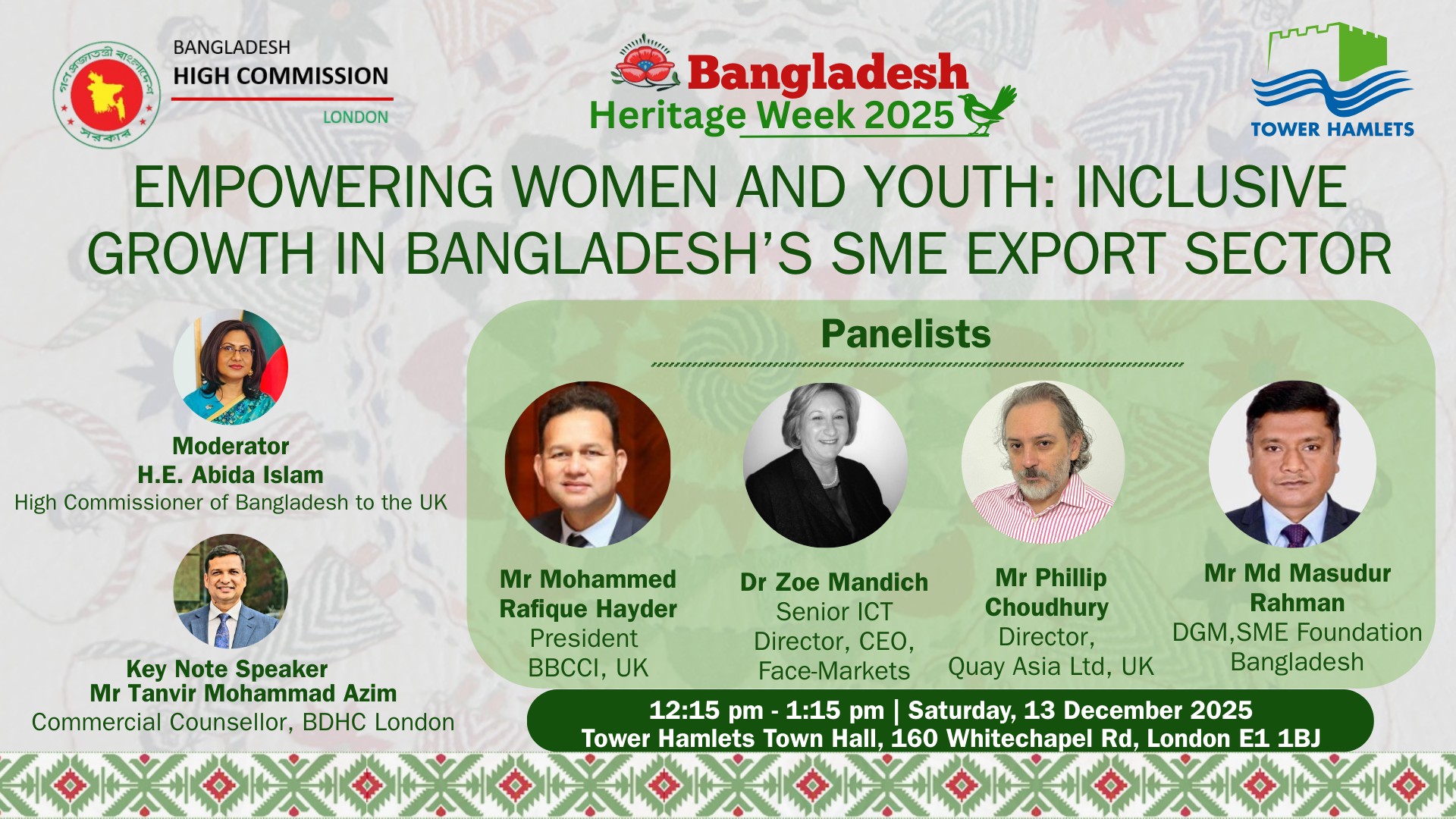
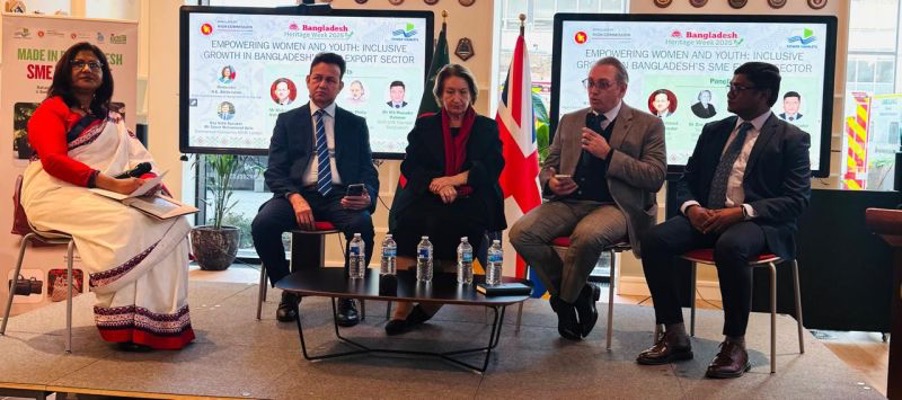
At Bangladesh Heritage Week in London, Quay Asia presented key findings from the HSBC UK-Bangladesh Market Study - a comprehensive examination of the non-financial barriers that prevent Bangladeshi SMEs from accessing international markets. The event brought together policymakers, business leaders, and development practitioners to discuss trade pathways between the UK and Bangladesh.
Beyond Finance: The Real Barriers to SME Export Growth
Whilst access to finance is frequently cited as the primary obstacle for SMEs, our research reveals a more nuanced picture. Non-financial barriers - including limited market intelligence, weak quality assurance systems, inadequate branding capabilities, and a lack of compliance knowledge - are equally, if not more, constraining for Bangladeshi exporters seeking to penetrate UK and European markets.
Many SMEs possess competitive products but lack the institutional support and knowledge infrastructure to navigate complex regulatory environments, meet buyer due diligence requirements, or build the trusted relationships that underpin long-term trade partnerships.
LDC Graduation and the DCTS Imperative
With Bangladesh set to graduate from Least Developed Country status in 2026, the stakes could not be higher. Graduation will mean the loss of preferential trade access that Bangladeshi exporters have relied upon for decades. The UK's Developing Countries Trading Scheme (DCTS) offers a crucial bridge, but SMEs must be prepared to meet its requirements.
Our analysis found that many SMEs are either unaware of the implications of LDC graduation or have not begun preparing for the transition. Building export readiness now - through targeted capacity building, compliance training, and market linkage programmes - is essential to prevent a cliff-edge effect on trade volumes.
Women and Youth Entrepreneurs: Untapped Potential
The study highlighted significant untapped potential amongst women-led and youth-led SMEs. These enterprises often demonstrate higher levels of innovation and adaptability but face additional barriers including limited networking opportunities, weaker access to trade finance instruments, and societal constraints on mobility and market engagement.
Impact investment frameworks that specifically target women and youth entrepreneurs could catalyse a more inclusive trade ecosystem. Several UK-based impact investors expressed interest in dedicated facilities for Bangladeshi women-led export businesses during the Heritage Week discussions.
Capability Over Cost: Shifting the Narrative
Bangladesh's traditional competitive advantage has been cost - particularly in the readymade garments sector. However, as wages rise and competing nations offer similar cost advantages, the country must shift its narrative from cost to capability. This means investing in product diversification, design innovation, quality management systems, and digital marketing capabilities.
The SMEs that will thrive in post-LDC Bangladesh are those that can demonstrate value beyond price - through sustainability credentials, ethical sourcing practices, and the ability to co-create with international buyers.
Towards an Integrated Support Ecosystem
The Heritage Week discussions underscored the need for an integrated SME support ecosystem that connects government trade facilitation agencies, private sector associations, financial institutions, and development partners. Fragmented support - where each actor operates in isolation - has limited the impact of individual interventions.
Quay Asia's recommendation centres on establishing a coordinated platform that provides SMEs with end-to-end support: from market intelligence and compliance advisory to buyer matchmaking and post-export follow-up. Such a platform would significantly reduce the transaction costs and information asymmetries that currently disadvantage smaller exporters.