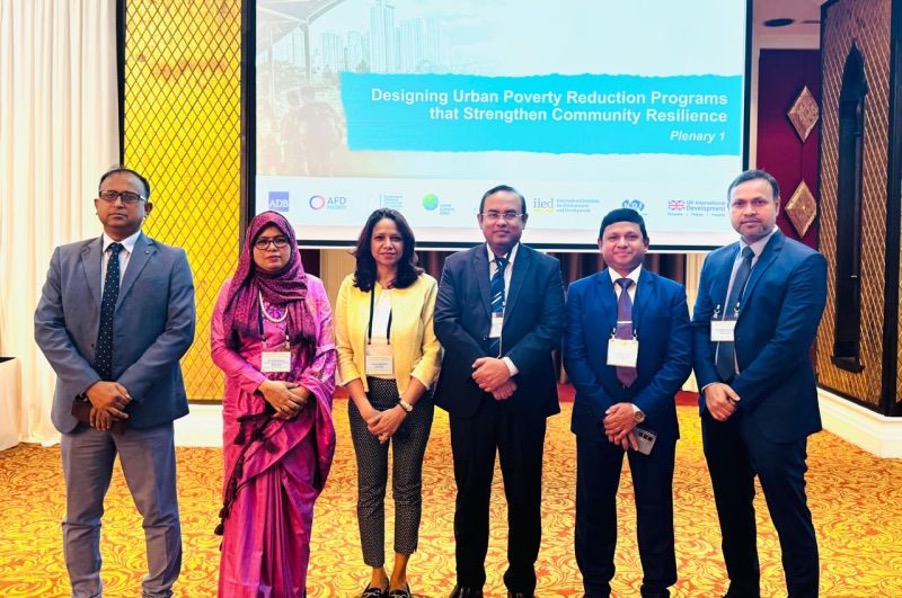
The concept of an Asia-Africa BlueTech Superhighway represents an ambitious vision for connecting the marine economies of two continents through technology, investment, and knowledge exchange. At a recent forum on sustainable fisheries, Quay Asia contributed perspectives on Bangladesh's blue economy potential and the investment challenges that must be overcome to realise it.
Bangladesh's Deep-Water Fishing Challenge
Bangladesh possesses a vast maritime territory - its Exclusive Economic Zone extends over 118,000 square kilometres in the Bay of Bengal. Yet the country's deep-water fishing capacity remains severely underdeveloped. While artisanal and nearshore fishing supports millions of livelihoods, the deep-water resources that could significantly boost protein supply and export earnings remain largely untapped by Bangladeshi vessels.
Foreign fishing fleets - operating under various licensing arrangements - currently harvest a significant portion of Bangladesh's deep-water marine resources. The economic value that flows out of the country as a result represents a substantial opportunity cost for an economy seeking to diversify its export base and create higher-value employment.
Data Scarcity: The Hidden Barrier
One of the most significant barriers to sustainable fisheries development is the lack of reliable data. Bangladesh's marine fisheries data is fragmented, outdated, and often based on estimates rather than systematic surveys. Without accurate stock assessments, it is impossible to set sustainable catch limits, design effective management plans, or attract responsible investment.
Investors - whether domestic or international - require data to assess risk and opportunity. The absence of reliable information on fish stocks, migration patterns, seasonal variations, and ecosystem health makes it difficult to build credible business cases for deep-water fishing ventures. Closing this data gap is a prerequisite for responsible blue economy development.
Connecting Government, Private Sector, and Development Partners
Sustainable fisheries development requires coordinated action across three domains: government (policy, regulation, enforcement), private sector (investment, technology, market access), and development partners (technical assistance, capacity building, financing). In Bangladesh, these three communities operate largely in silos, with limited platforms for structured dialogue and joint planning.
The government's recently articulated blue economy agenda provides a policy framework, but translating policy into investment-ready projects requires intermediary capacity that currently does not exist at scale. Quay Asia has been working to bridge this gap, facilitating dialogue between fisheries ministry officials, potential investors, and technical partners.
South-South Collaboration: Learning from African Experience
The Asia-Africa BlueTech Superhighway concept recognises that many of the challenges facing Bangladesh's fisheries sector are shared across the Indian Ocean and beyond. African nations - particularly those in East Africa - have made significant progress in sustainable fisheries management, marine spatial planning, and blue economy governance.
Knowledge exchange between Bangladesh and countries like Kenya, Tanzania, and Mauritius could accelerate progress in areas including vessel monitoring systems, community-based fisheries management, marine protected area design, and seafood value chain development. South-south collaboration offers contextually relevant solutions that may be more readily adaptable than approaches developed in high-income country contexts.
The Path Forward
Realising Bangladesh's blue economy potential will require sustained investment in marine research infrastructure, a supportive regulatory environment for responsible private investment, and international partnerships that bring technology and knowledge transfer. The Asia-Africa BlueTech Superhighway provides a compelling framework for this cooperation, but translating vision into action will require dedicated institutional commitment and patient capital.